
No. Michigan no-fault insurance, called personal injury protection (PIP), pays for injuries, not vehicle damage. Your own collision coverage pays to fix your car after a crash, no matter who caused it, and comprehensive covers deer, hail, and theft. If you weren't at fault and owe a deductible, a mini-tort claim can recover up to $3,000 from the at-fault driver. Collision coverage is optional, so without it you may pay most of the repair yourself.
The Four Parts of a Michigan Auto Policy
Most confusion comes from treating "no-fault" as the whole policy. It's one piece. These are the parts that matter after a crash:
- Personal injury protection (PIP). The no-fault part. It pays medical bills, lost wages, and related costs for injuries, regardless of fault. Since July 2, 2020, drivers choose a PIP medical limit instead of automatically carrying unlimited coverage.
- Property protection insurance (PPI). Pays for damage your car does to other people's property in Michigan, such as buildings, fences, and properly parked cars.
- Collision coverage. Pays to repair your own car after it hits another vehicle or an object. It's optional, and it comes in three types.
- Comprehensive coverage. Pays for non-collision damage to your car: deer strikes, hail, falling trees, fire, theft, and vandalism. Also optional.
Notice what's missing: a part that makes the other driver's insurance pay to fix your car. Outside of the $3,000 mini-tort and the parked-car rule, Michigan generally doesn't work that way. You insure your own car.
Who Pays for Your Car, Crash by Crash
| What happened | Who pays to fix your car |
|---|---|
| Another driver hit you and caused the crash | Your collision coverage. Any deductible can be recovered from the at-fault driver through mini-tort, up to $3,000. |
| You caused the crash | Your collision coverage, minus your deductible. Limited collision typically pays nothing when you are more than 50% at fault. |
| You hit a deer | Your comprehensive coverage, minus your deductible. See what to do if you hit a deer. |
| Hail, a falling tree, theft, or vandalism | Your comprehensive coverage. See hail damage and insurance. |
| Your properly parked car was hit | The at-fault driver's property protection insurance (PPI). |
| You hit a guardrail, pole, or fence | Your collision coverage for your car. Your PPI pays the property owner. |
| Hit-and-run | Your collision coverage. Report it to police right away. How your deductible is handled depends on your coverage type and policy terms. |
| No collision coverage and someone else caused it | Mini-tort from the at-fault driver, up to $3,000. Anything above that is yours. |
Limited vs. Standard vs. Broad Form Collision
Michigan insurers offer three types of collision coverage, defined in MCL 500.3037. The difference is how fault affects your deductible. "Substantially at fault" means you were more than 50% responsible for the crash.
| You were not at fault | You were mostly at fault | Cost | |
|---|---|---|---|
| Broad form | Pays, deductible waived | Pays, you pay the deductible | Highest |
| Standard | Pays, you pay the deductible | Pays, you pay the deductible | Middle |
| Limited | Pays, no deductible | Typically pays nothing | Lowest |
Pull up your declarations page and look for the word next to "collision." If it says standard, a not-at-fault crash still costs you the deductible up front, which is exactly what mini-tort is for. If you see no collision line at all, ask your agent what a serious crash would cost you. Policy wording varies, so your agent is the final word on your coverage.
What This Means When You Need a Repair
- 1File with your own insurer.
For damage to your car, the claim almost always goes through your own collision or comprehensive coverage, even when the other driver caused the crash.
- 2Choose your own shop.
Michigan law says your insurer can't unreasonably restrict your choice of repair shop. A "preferred" shop is a suggestion. See direct repair programs and your right to choose.
- 3Let the shop handle the adjuster.
Your shop documents the damage, sends the estimate, and submits supplements if teardown finds hidden damage. You shouldn't have to referee it.
- 4Recover your deductible if you weren't at fault.
Keep the final invoice and file a mini-tort claim against the at-fault driver.
- 5Ask for a second opinion on a total loss.
If the insurer says the car isn't worth fixing and you disagree, a total loss evaluation gives you an independent look at the damage.
Commerce Collision is an independent, family-owned shop in Commerce Township with no direct repair contracts. We work with all major insurers and welcome out-of-pocket customers. Repairs are overseen by Sam Behnam, a Michigan State Certified Master Auto Mechanic (#1304862), and we're a registered Michigan Motor Vehicle Repair Facility (F173359). We can also help you arrange a rental while your car is in the shop.
Frequently Asked Questions
Does Michigan no-fault insurance pay to fix my car?
No. The no-fault part of a Michigan policy, personal injury protection (PIP), pays for injuries. Damage to your own car in a crash is paid by your own collision coverage, if you carry it, or by comprehensive coverage for deer, hail, theft, and similar losses.
Who pays for my car if someone else hits me in Michigan?
Your own collision coverage pays, even though the other driver caused the crash. Depending on your coverage type you may owe a deductible, which you can try to recover from the at-fault driver with a mini-tort claim of up to $3,000.
What is the difference between limited, standard, and broad form collision?
Broad form pays regardless of fault and waives your deductible when you are not substantially at fault. Standard pays regardless of fault, but you pay the deductible every time. Limited is the cheapest and pays without a deductible only when you are not substantially at fault, meaning not more than 50% to blame.
What does "substantially at fault" mean in Michigan?
Under MCL 500.3037, it means your action or inaction was more than 50% of the cause of the accident.
Who pays if my parked car is hit in Michigan?
If your vehicle was parked in a way that did not create an unreasonable risk, the at-fault driver's property protection insurance (PPI) pays for the damage under MCL 500.3123.
Is collision coverage required in Michigan?
No. Collision coverage is optional in Michigan, but a lender or lease company usually requires it. Without it, you pay to fix your own car after a crash you caused, and you can only recover up to $3,000 through mini-tort when someone else caused it.
Can my insurer make me use its body shop?
No. Under MCL 500.2110b, a Michigan auto insurer cannot unreasonably restrict your choice of repair shop for covered repairs.
Know What's Covered Before Work Starts
Get a free estimate and a straight answer on what your insurer is likely to cover. We'll handle the adjuster and coordinate towing if your car can't be driven.
3080 Oakley Park Rd, Commerce Township, MI 48390 · Open 6 days including Saturdays · 24/7 towing available
Sources
- Michigan Legislature — MCL 500.3037, collision coverage types and "substantially at fault"
- Michigan Legislature — MCL 500.3123, property protection insurance and parked vehicles
- Michigan Legislature — MCL 500.3135, tort liability and mini-tort damages
- Michigan Department of Insurance and Financial Services (DIFS) — auto insurance
This article is general information for Michigan drivers, not legal or insurance advice. Coverage depends on your specific policy — confirm details with your agent.
About the Author
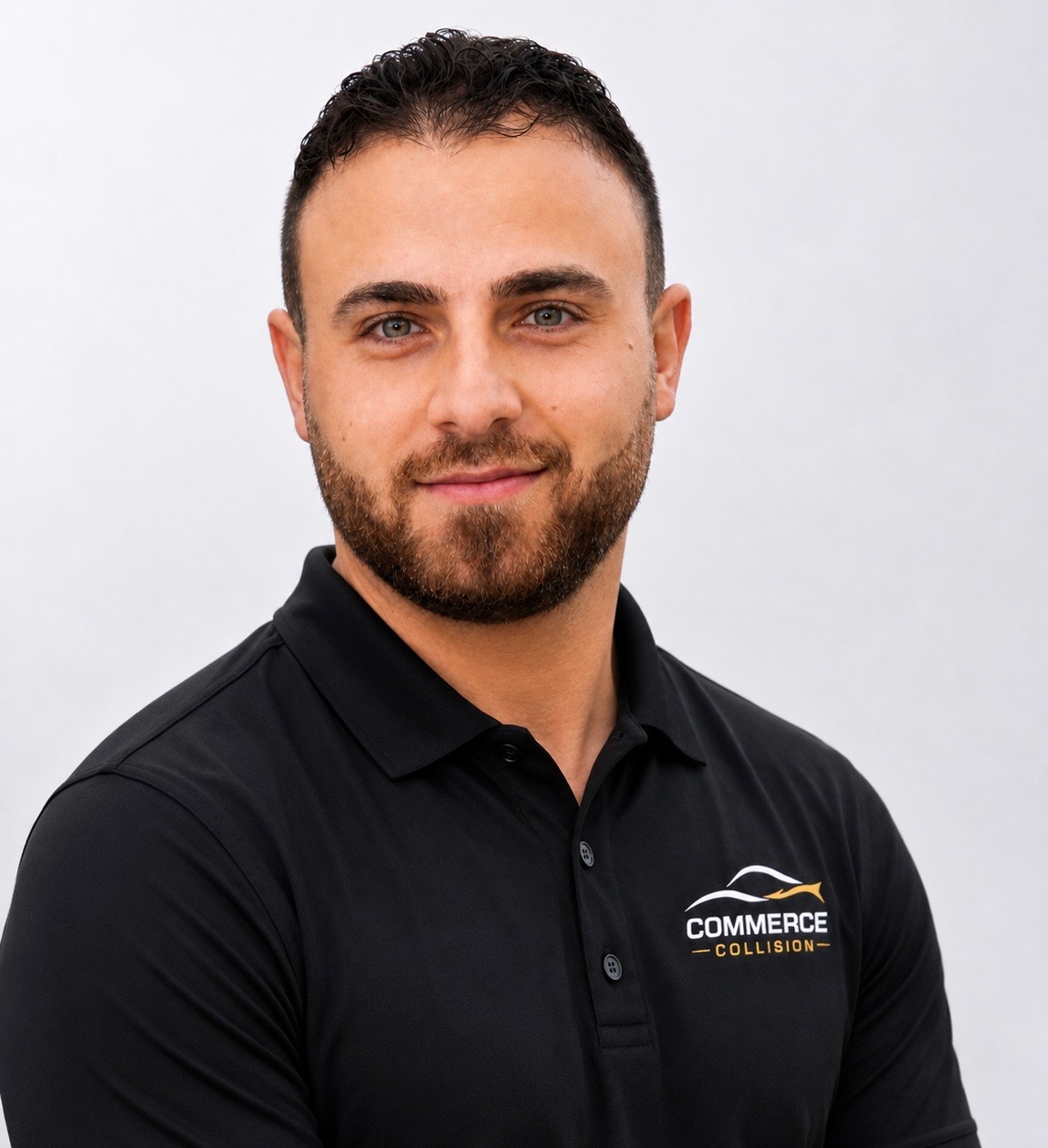
Wesam "Sam" Behnam
Michigan State Certified Master Auto Mechanic (Cert. #1304862)
Certified in Unitized Body Structural Repair & Collision-Related Mechanical Repair. Sam leads the repair team at Commerce Collision in Commerce Township, MI.